Going into this class, I expected to learn more about coding and using unity. It turns out I did way less of that than anticipated. However, the experience I gained was more in tune with my interests.
While a lot of the more academic material covered in this course changed my perspective on what really goes into developing an indie game, what was most impactful on me was actually creating all of the art and music for my team’s game, Donut Dash.
It was a real grind getting everything done, especially the last couple weeks. I could not believe how much work it was drawing the basic assets needed for the game. But then to create the music and cutscenes added so much to this.
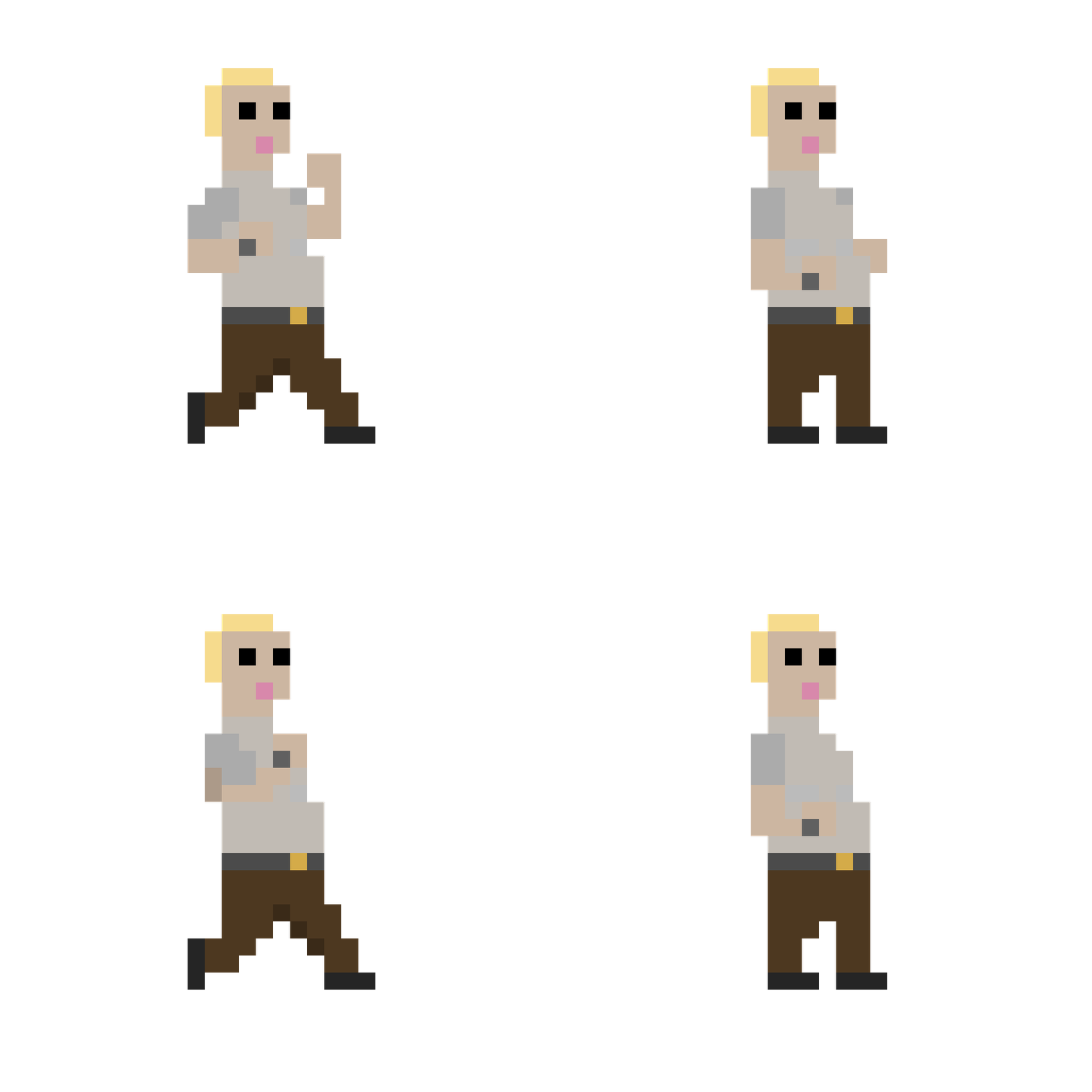
I thought the task of game artist would be super easy given I had chosen to use pixel art. I could not have been more wrong! See the first version of the player I made compared to the final one.
I have a new appreciation for both pixel and chiptune artists. This course has opened up my eyes to the talent and dedication held by indie game artists.
For the final final stretch of making Donut Dash, I’ve had a ton of work to do. My three main goals were to finish all art assets for the boss fight, create 4 original chiptune style songs, and make cutscenes for before and after the bossfight.
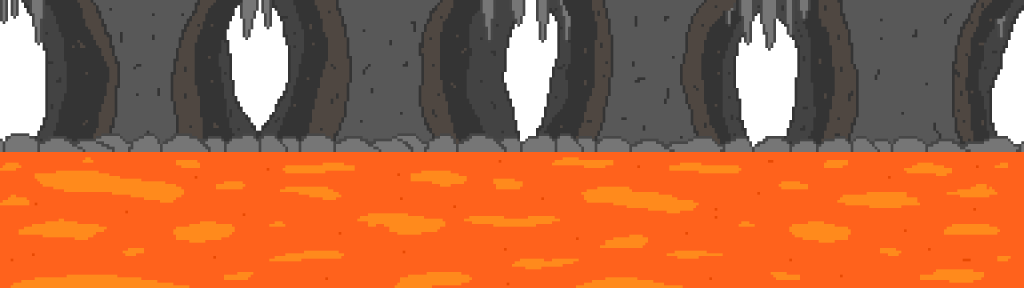
I’ve already finished creating all the assets for the boss fight. It takes place underground on a river of lava. I think the lava river looks good, but the background could be better. I’ve suggested to Ryan (the game’s programmer) that he may want to just create a wall of dirt blocks I made for the main level and use that as the background.
Making music has been a blast. My creative process has been thinking of what I want the song to sound like, (happy, sad, generic boss fight, etc.) coming up with some ideas on guitar, and then transcribing them into FL Studio. I’ve made a couple songs I’m quite proud of now, however, I haven’t come up with anything I think is good enough to be used during the main level. (what the player will hear the most) For now, the plan is to just use a longer version of the boss music during the main level. I’ve also made songs for the title screen and the credits after the player beats the boss.
I’m going to work on the last two cutscenes next, but I am going to try and make them as short as possible. This way I’ll be able to complete them on time and the player will spend more time in the action of the game.
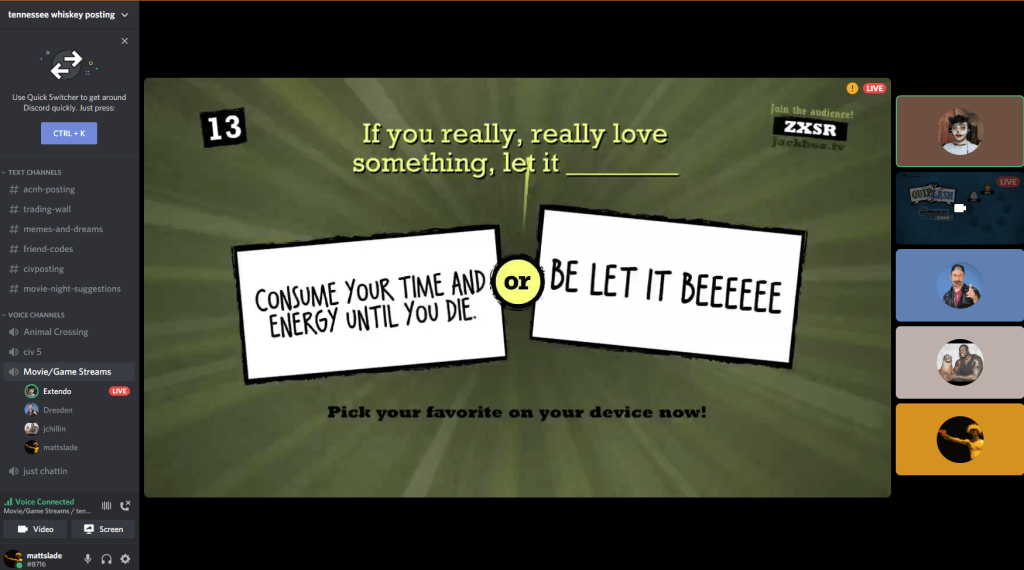
While I was unable to attend the two in class JackBox sessions, my friends and I often play JackBox games together. Typically a primary game screen will be displayed on a TV or monitor while players interact with the game via their smart phones. More recently, the experience is slightly different since we can now only play over discord as one person shares the game screen rather than all being in the same room together.
I will describe a game session that occurred within the last week. The three games we played were Drawful 2, Quiplash, and my personal favorite, Survive the Internet. Drawful 2 gives each player a prompt which they are then to draw within a time limit. Other players then guess what they think the drawing is of. After that each player sees everyone’s guess as well as the real answer. Points are gained by either selecting the correct answer, having other players select your incorrect answer or having people select the correct answer for your drawing.
In Quiplash, each player receives two prompts per round. The prompts could be something like “the real reason the dinosaurs died.” It is the player’s goal to come up with the most rediculous response to gain the most points. The game works similarly to Apples to Apples or Cards Against Humanity, except the player is not limited by pre-written responses.
Quiplash
Survive the Internet has players try to embarrass other players on fake social media cites. The mechanics change for each three rounds. In one round, each player comments on a topic given to them. Other players then replace the original topic and vote on who created the most ridiculous post and comment. This game is my favorite because it allows my friends and I to make fun of each other.
A nice feature of JackBox games is the option of adding audience players. While these players don’t get to participate in creating anything in the game, they do get to vote along with the more active players. This feature allows people to participate when the max number of players has been reached and can shift the scores when they vote.
Donut Dash by Matt Slade (Artist, Producer) and Ryan Tran (Programmer, Designer)
We are also using CC SFX from freesound.com and a midi version of a song where the artist lost rights to it for sampling another song. I’m not exactly sure how to credit that, but I plan on making my own retro 8 bit sounding track for the final product anyway.
The current issues are that there are no idle animations and that there is no escape menu.
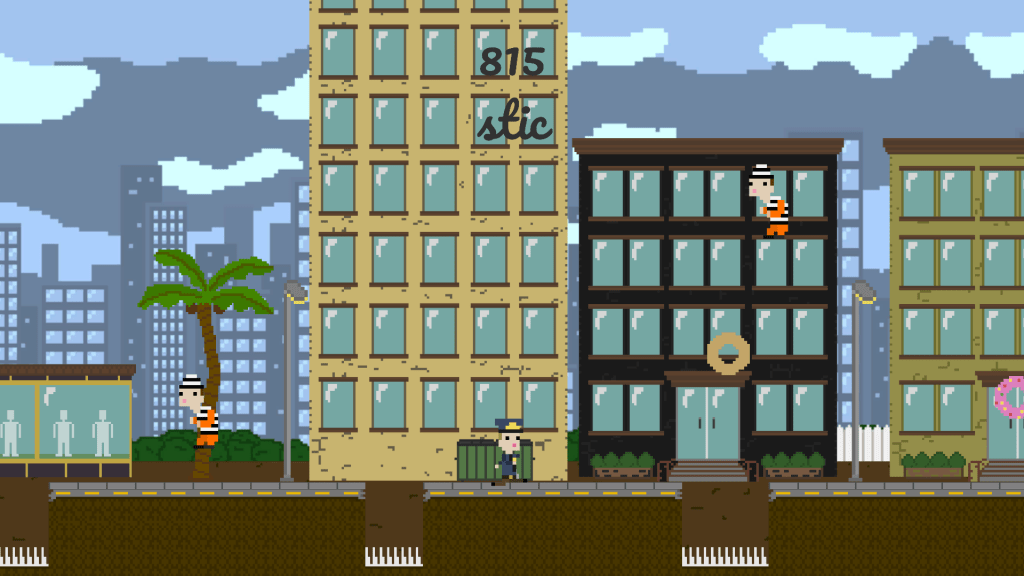
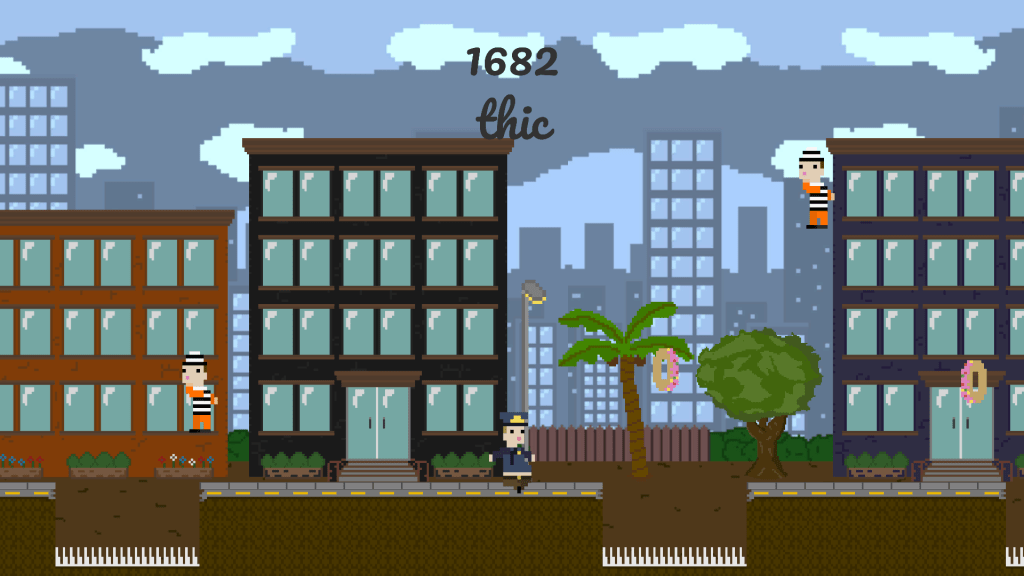
To play, the player (seen above) simply uses a A and D to run back and forth and SPACE to jump. They gain points by collecting donuts and coffee and gaining distance. They have to avoid obstacles (spikes, jumping bad guys) and coffee and donuts affect the weight and speed of the player can move.
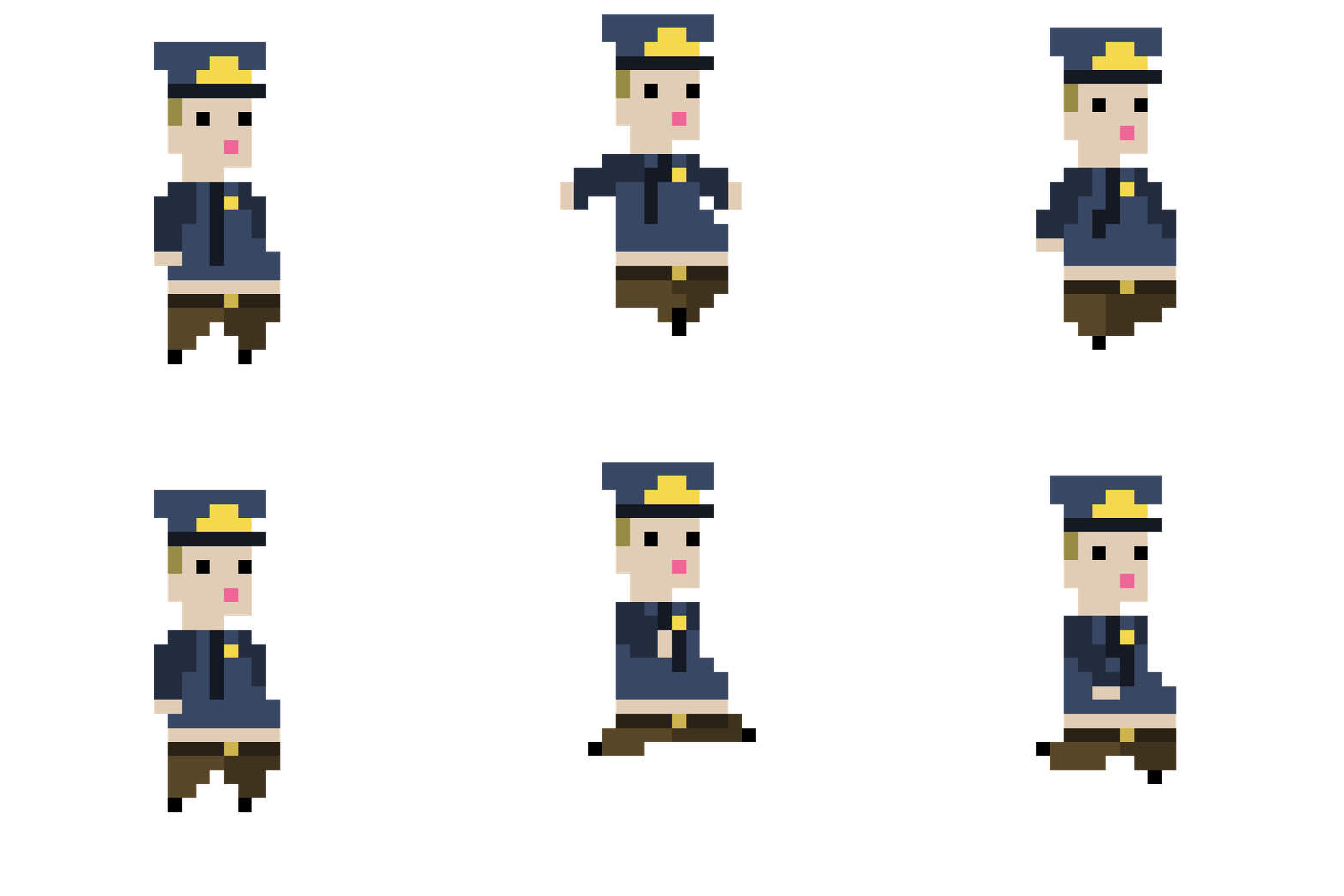
The biggest elements we are going to add to the game are an original soundtrack, a bird that shoots poop at the player, very short cut scenes, and a boss fight. The boss fight will take place in an underground lava level against the hover board riding, donut thief seen below where he’ll shoot flaming donuts at you.
My partner, Ryan, and I have been working super hard for the past month ur so on our game, Donut Dash. It’s an infinite randomly generated 2D platformer where the player’s goal is to gain the highest score by covering distance and eating donuts. Donuts and coffee grant the most points but eating them affects the player’s weight and speed.
My responsibilities for this game were producer as well as artist. I’m really enjoying creating pixel art assets from the game and seeing my self improve at this medium.
Our first playtest session was held over zoom where our two playtesters were able to share their screen with Ryan and I as they played the game. The most important critique they had was that the game should display your current high score after each game. This is the first thing we are going to implement next.
Other playtests were held within an online discussion. This is where we got the most feedback. Many playtesters had lots of kind things to say about the games art and the way it feels to play. However, they also pointed out a few areas we could improve upon. One tester found a bug where if you press “w” and “up arrow” at the same time, the player does a massively high jump. We were really surprised by this considering neither of us discovered it despite playing the game for hours each. I thought the super jump was kind of fun once I tried it myself; we may nerf this jump and leave it in as a secret mechanic. Another playtester suggested we a add a billboard and the beginning of the game with a short written tutorial. I was already planning on eventually adding this exact idea to the game, but it was nice knowing that it’s something players want to see.
The most requested change to the game was to change the placement of donut and coffee items throughout the level, allowing the player to strategically choose if they want to gain or lose weight. Personally, I liked the way most items are placed in the players way so they are forced to mindlessly picked them up, however I also like the idea of the added strategy this would provide.
During this in class lab, I played 5 games along with my partner Ryan. The first game I played was “This is the Only Level,” a platformer. I then watched Ryan play a dating simulation game where the player dates a dinosaur called “Jurassic Heart.” “Dodgeball” was a game made by students from the same class in a previous semester. It was pretty much a 2D version of what the name implies. “Canabalt” was another platformer. “Don’t Shit your Pants” was a text based adventure and “Starcatchers” was a game where you could interact with a 8 bit handheld console.
“This is the Only Level” and “Canabalt” shared the most characteristics out of all the games. Firstly, the main aesthetic of both the games was challenge. They were both quite difficult and had many obstacles for the player to avoid. They were also mechanically similar in that both of them employed running and jumping as the main mechanic.
My two favorite games Ryan and I played were “Jurassic Heart” and “Don’t Shit your Pants.” I watched Ryan play “Jurassic Heart” and he watched me play “Don’t Shit your Pants.” This really showed me the similarities and differences between experiencing playing a game yourself and watching someone else play.
Jurassic Heart
The two games were similar in that they were both used text to allow the player to make decisions. The main difference was that “Jurassic Heart” gave premade choices, while “DSYP” made the player type out their own. While playing “DSYP” I felt pressure to do well in the game, because whatever happened was up to me. While watching Ryan, I felt a similar pressure, but not because I was responsible for whatever happened in the game. Watching Ryan’s reactions to the game in real time made me feel empathetic towards him as another human being. I wanted him to do well, because I was emotionally invested in him as a player.
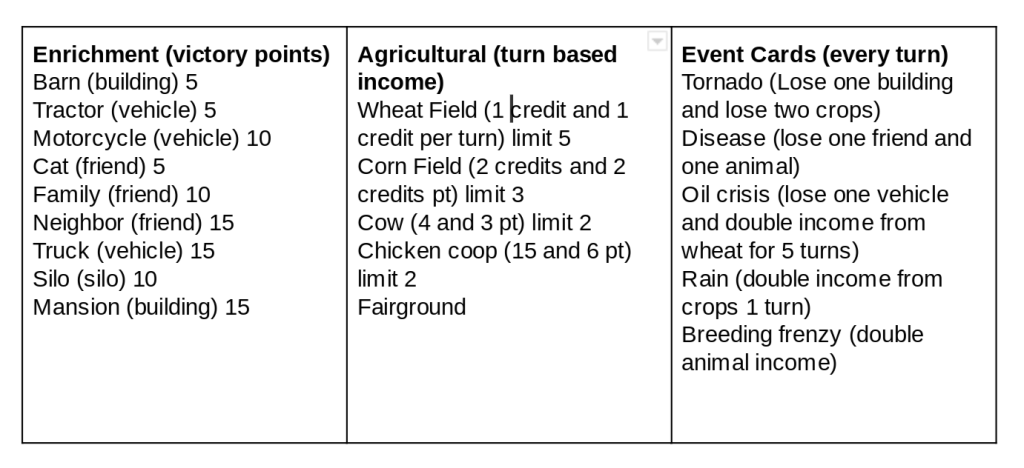
My partner and I prototyped a game I have named “Farmily Feud.” The game’s core mechanism is building as it is each player’s goal to build the biggest farm. Other mechanisms used include income and dice roll.
Essentially, each player uses income to purchase either Victory Point cards, (3 needed to win) or property which generates income each round. Victory cards cost 5 more credits each time a player buys one with the first one costing 10 credits. Properties can only be purchased after purchasing a certain number of lower tier properties within the same class and are marked using tokens. Event cards are drawn from a pile each round and affect both players. There are positive and negative events for each property class. (Crops, Livestock, and Markets) All credits spent by players go to the landlord. Once the landlord reaches 50 credits, each player rolls a dice at the beginning of the next round and must remove that many tokens from their properties.
Below is the first thing we designed for the prototype: the game’s original economy, except event cards were played once every three rounds.
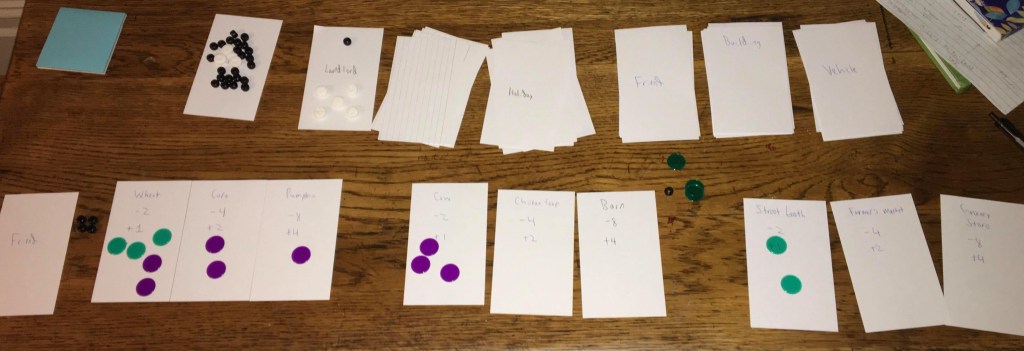
Here is our first playthrough:
I went first and started with one credit and one wheat. I purchased another wheat and ended my turn. Jacob went next and did the exact same thing. We both realized this was the player’s only option during the first turn. In this first prototype we each had base index cards and used sticky notes to indicate properties owned.
In round 2, I purchased corn. Jacob did the same. I again purchased corn… and so did Jacob. The first event card was played which doubled income from animals for one turn. Neither of us had animals and were unaffected.
I bought another corn in round 3. Jacob bought a cow. In the next round I bought my first Victory Card which was a Barn. At this point, we decided we needed to work some kinks out then restart the game.
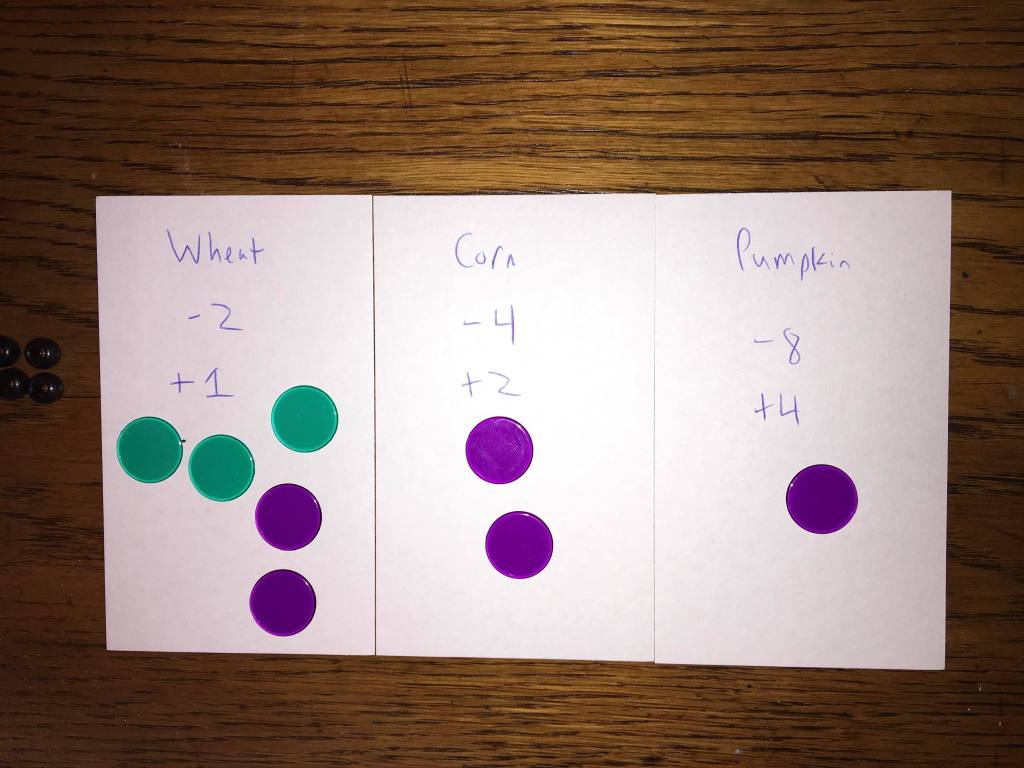
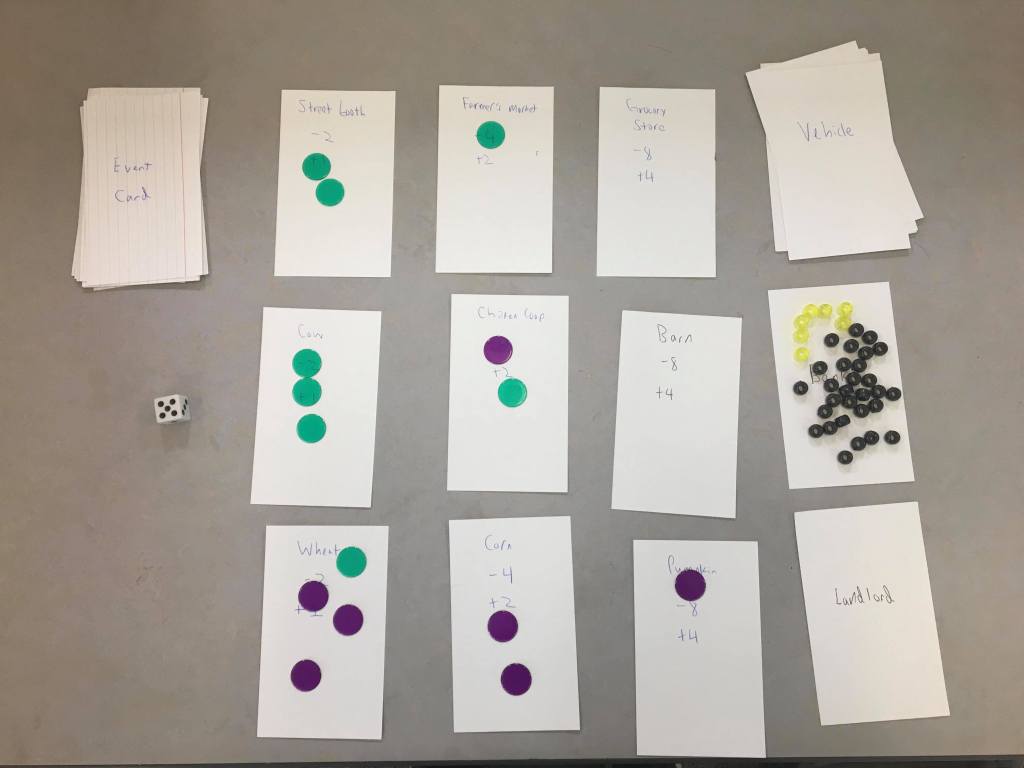
We then created the token system with separate cards for each property to create a clearer indication of what properties each player had. Tokens also limited the number of properties each player could own to 9. (later changed to 8) Jacob changed the property cards to what we have today with different tiers. We then began our second play test, after which we realized the game still needed a lot of balancing.
The next day I worked on what I thought could improve the game. The biggest changes were adding the landlord mechanic, upping the price of Victory cards, and making event cards be played every round. However, apart from the Landlord section, the game looked almost visually identical to the last version.
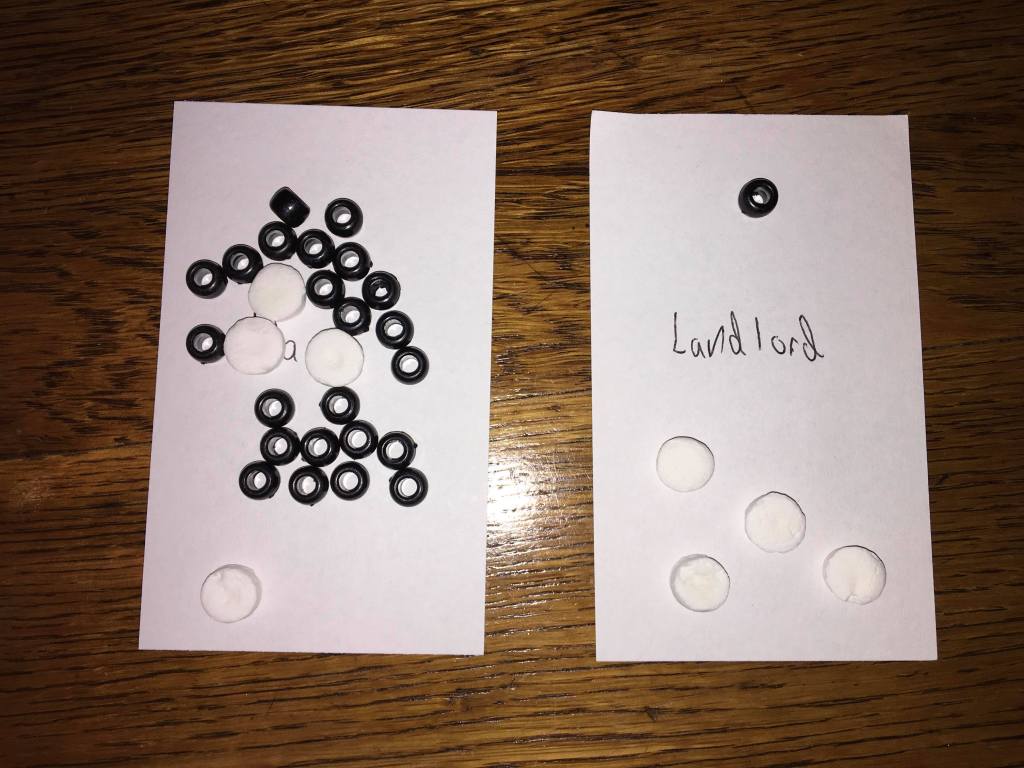
Below are the Landlord and bank cards. Black beads represent 1 credit. The Altoids represent 10.
Each game now lasts about 20 minutes. Here is my girlfriend, Missy and my second play test:
We rolled dice to see who went first. She rolled higher. She used her first credit to buy a cow card. I went next and bought another wheat. An event card was played. A tornado knocked down all of our market properties which we had none of. She bought another cow and I bought my third wheat. The next event card was rain which doubled crop income. Missy bought a third cow. I bought corn.
The next two turns saw no negative event cards that affected us. Missy bought her second chicken coop and I bought my third corn. In the next round, the breeding frenzy card was played which doubled her animal income. She bought her first Victory Card. She also bought a barn and three wheat. The landlord now had over 50 credits. My next turn I bought a pumpkin.
Next, we rolled dice. Missy rolled a two and removed two cows. I rolled a six and removed 4 wheat and 2 corn. With a clear advantage at this point and some further luck later on, Missy went on to win the game with three Victory cards to my one.
Overall, we were both pretty happy with the game. Missy and I both felt that after the game was balanced, the element of having to lose and rebuild tokens multiple times per game made the game quite fun. The element of randomness from the event cards and dice roll kept us on the edge of our seats each round. It also made the game more strategic as each player had to decide to play it safe and build on all three property classes (protecting you from event cards) or betting it all on one class and building more profitable properties.
My next play test was with another classmate, Tony. I made some small changes to the game before this play test. I changed the pieces that represent 10 credits, and I changed the board to a more vertical layout. This allows each player to reach elements easier. Unfortunately, we only had time to play a majority of one game, but it was still very helpful getting an opinion from a third person.
I will skip a few rounds in to this play test since the games are lengthy and I want to give a better impression of what goes on later in the game. Tony and I have 1 victory card each. She has two cows, two chickens, a barn, and two wheat. I have two street booths, a farmer’s market, and two grocery stores.
Tony’s first move is to purchase another wheat and a corn. The landlord now has over 50 credits. During my turn, I buy another grocery store. Next, we each roll the dice, Tony rolls a 1 and I roll a 5. She removes a wheat. I remove all my tokens, except one grocery store.
At this point, I’m pretty much screwed and to make matters worse, the event card that is pulled is breeding frenzy. With double income from animals, Tony now has a ton of credits. She uses them to buy another event card and another barn. At this point, we ran out of class time and had to end the game. However, I think it was clear who was going to win.
Although I’ve never actually won my game, I’m quite proud of it. Tony, like Missy also thought the game was really fun and said she would “totally play it again,” which was great to hear. Her recommendation was to use a different type of piece for credits such as paper money like Monopoly. Another complaint she had was that the game was a bit slow in the beginning, but became a lot more fun once more tokens were on the board.
During last weeks class, I played a board game called “Secret Hitler.” In this game, two teams, the Fascists and Liberals, go head to head trying to push forward their party’s policies.
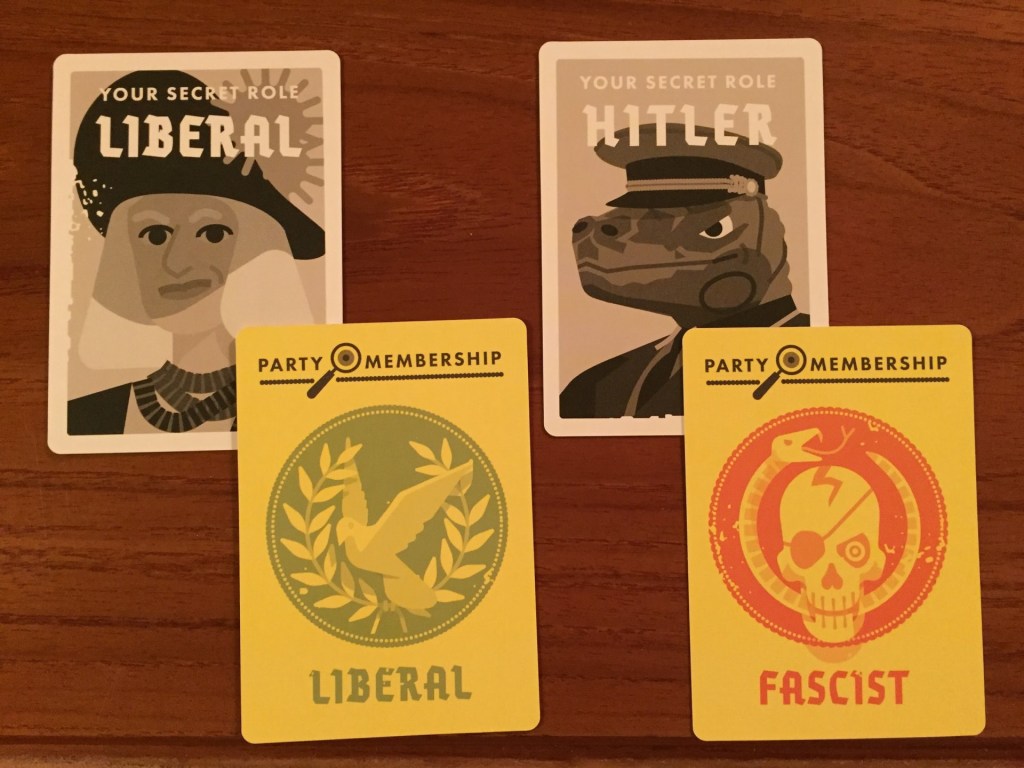
In our game of 7 total players, after the envelopes containing our loyalty cards (as seen below) were shuffled and distributed, there were four liberals, three fascists, and I was Hitler who is another member of the Fascist party. Only the Fascists, but not Hitler, were allowed to know who had what card.
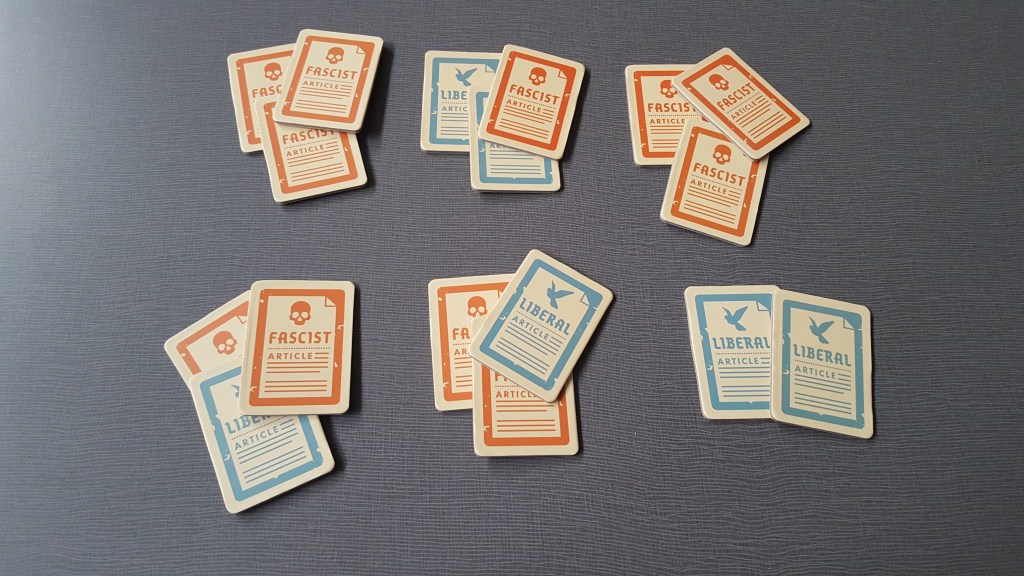
David was the first president and chose Adam as his chancellor. The group votes Ja! or Nein! to accept this government. Everyone voted Ja! excpet Adam and the government was put into power. David draws the first three policy cards. Any individual card can be either a Liberal or Fascist policy. David discards one of the three cards and hands the remaining to to Chancellor Adam. Adam as Chancellor must now select one of the two policies to put into play. Adam plays a fascist card.
The round is over and now the Presidential role gets rotated clockwise to Ryan who chooses Brandon as his chancellor. Everyone votes Ja! to accept this government. After the President and Chancellor go through their process, a Liberal policy is put into play. Now there is one Liberal and one Fascist policy on the board.
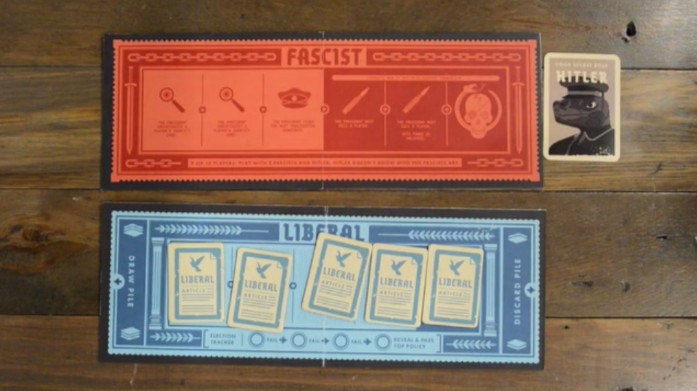
The game has two boards, a Liberal and Fascist board. Each party is trying to pass enough policies to complete their board. While the Liberal board has no special powers, once enough Fascist policies have been played, whoever is the current President is granted a power such as being able to see someone’s secret loyalty card. The Liberals can win by either filling their board with 5 Liberal policies or by assassinating Hitler. The Fascists can also win by filling their board, but if Hitler is elected as Chancellor after three Fascist policies have been put into play, the Fascists win.
Stacy is made the next President and chooses David as Chancellor. There is electoral chaos as the vote does not pass 4 to 3. The Election Tracker is moved over one space. Too many vetoed governments in a row results in chaos and a random policy is played. Deana is made the next President with myself as Chancellor. The vote passes and I play a Liberal card. (I didn’t want anyone to suspect I was Hitler.) There are now two Liberal and one Fascist policies in play. The Election Tracker is moved back to the starting place.
Adam is the next president with David as Chancellor. The vote passes and a Fascist card is put into play. This now allows the president to see someone’s loyalty card. He checks David’s card but does not say anything. I’m the next president and nominate Stacy as my Chancellor. The vote passes and I draw three cards, which annoyingly are all Fascist. (So much for trying to cover my tracks as a fake Liberal) Stacy is forced to now play a Fascist card. I now have the power to assassinate someone but I choose not to. There are now three Fascist and one Liberal cards on the board.
David is the next President and nominates me as Chancellor. I then got really excited… Really excited. There were three fascist cards and I as Hitler was about to become Chancellor, therefore winning the game. In my excitement I yelled “I’m Hitler! Fascists win!” Then David looks at me with a blank stare. We hadn’t voted Ja! or Nein! yet… My bad.
For this exercise, I chose the game “Tron.” Recently my friends and I have been playing Grand Theft Auto Five online together and we all really enjoy the Tron themed light cycle minigame which inspired me to choose this classic arcade version.
I enjoyed the game much more than I anticipated although I did not get very far in it. The game essentially consists of four minigames. One has the player try to shoot another tank with their tank, another has the player try to enter a circle in the middle of the screen without being killed by spiders, one game is based on the light cycles, and the last has the player try to enter this rainbow thing. To be honest, I have no idea how to beat the last one or what’s really happening. The tank game is challenging due to having to control both the movement of the tank and the movement of the gun. It’s a bit unfair as after my fifth attempt, I eventually managed to shoot the enemy tank twice before it killed me with one hit. The next game where you have to walk into a circle was also quite challenging. You can shoot the enemy spiders blocking your way, but they always spawned faster than I could kill them. There’s a five second timer to make things even more difficult. I never beat it. The light cycle game was my favorite. The player and the opponent are each given motorcycles that leave trails of light behind them. The goal is to make your opponent hit your light trail and explode without hitting their light trail. It works a bit like Snake and can be seen in the image above.
It took me a minute to figure out the controls for each minigame which was a bit frustrated and resulted in many deaths. Playing this on the original cabinet would have been a bit less tedious due to the controls being more physical/visual, especially in situations where the game says “press the trigger to control speed.” Which key is trigger!? (it’s ctrl)




 Matt Slade's Game Studies Blog